
Teeth Cleaning vs Teeth Whitening: What’s the Difference?
It’s a common mix-up: someone books an appointment expecting whiter teeth afterward, only to learn that professional teeth cleaning and teeth whitening are two entirely different services, with different purposes. Understanding the difference helps you know exactly what to ask for, and when, so you’re not left disappointed by results a cleaning was never designed to deliver.
What Professional Teeth Cleaning Actually Does
Professional teeth cleaning is a preventive dental hygiene treatment focused on your oral health, not your teeth’s appearance. During a cleaning, a dentist or hygienist removes plaque and tartar buildup that regular brushing and flossing can’t fully clear, particularly around the gumline and between teeth.
What it addresses:
- Plaque and tartar buildup
- Early signs of gum disease
- General oral hygiene maintenance
- Prevention of cavities and gum issues
What it doesn’t do:
- Significantly change the natural color of your teeth
- Remove deep, internal staining
That said, cleaning often does result in a subtle brightening effect, since it removes surface stains from coffee, tea, or plaque buildup. But this light stain removal is a side effect, not the main purpose, and shouldn’t be the primary reason to book a cleaning if visible whitening is really what you’re after.
What Teeth Whitening Actually Does
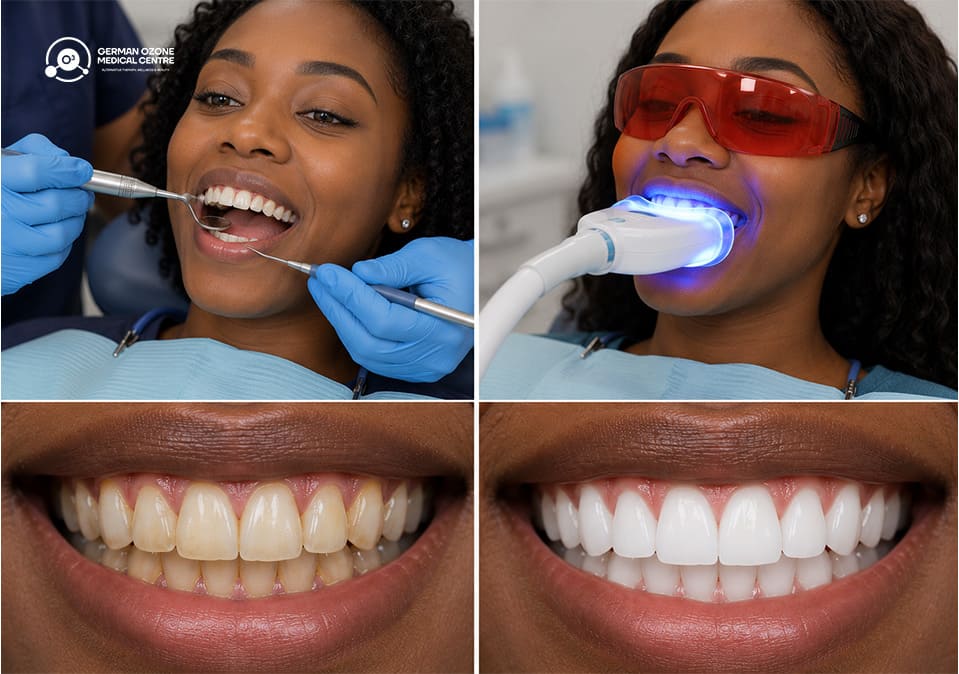
Teeth whitening is a cosmetic dental treatment designed specifically to lighten the color of your teeth, addressing staining and discoloration that a regular cleaning can’t fully remove.
What it addresses:
- Surface stains from coffee, tea, red wine, or smoking
- General yellowing that develops over time
- Deeper discoloration, depending on the whitening method used
What it doesn’t do:
- Clean beneath the gumline or remove tartar
- Address gum disease or cavities
Because whitening is purely cosmetic, it’s worth remembering that it doesn’t replace the health benefits a regular cleaning provides — the two treatments work on different problems entirely, and skipping cleanings in favor of whitening alone can leave underlying issues unaddressed even as your smile looks brighter.
Key Differences at a Glance
| Teeth Cleaning | Teeth Whitening | |
| Purpose | Preventive, hygiene-focused | Cosmetic, appearance-focused |
| Addresses | Plaque, tartar, gum health | Surface and deeper stains |
| Frequency | Every six months | As needed, based on staining |
| Health benefit | Prevents cavities and gum disease | Primarily aesthetic |
Do You Need Both?
For most people, yes, they serve different purposes. A professional cleaning keeps your teeth and gums healthy, while whitening addresses how your teeth look. In fact, many dentists recommend a cleaning before whitening treatment, since removing surface plaque and tartar first often gives more even, effective whitening results. Whitening applied over unclean teeth can also produce patchy or uneven results, which is another reason the two are often sequenced together rather than treated as interchangeable options.
Which One Should You Book First?
If you haven’t had a dental check-up and cleaning in the last six months, that’s generally the right place to start; it’s foundational for oral health, and it may even improve the appearance of your teeth on its own. Once your teeth and gums are in good shape, whitening becomes a more effective option if staining or discoloration is still a concern.
Common Whitening Methods
Not all whitening treatments work the same way, and understanding the basic options makes it easier to know what to ask for.
- In-office whitening — professionally applied and typically completed in a single visit, using stronger whitening agents than at-home options
- Take-home whitening kits — custom or standard trays used over one to two weeks, offering a gradual result with dentist oversight
- Over-the-counter whitening products — the least controlled option, with results and safety varying widely depending on the product
A dentist can help you weigh convenience against results, and flag anything in an over-the-counter product that might not be suitable for your teeth.
What to Expect From Each Appointment
A routine cleaning typically takes under an hour and involves scaling, polishing, and sometimes a fluoride treatment, alongside a general check for cavities or gum issues. Whitening appointments vary more depending on the method used, ranging from in-office treatments completed in a single visit to take-home kits used over one to two weeks. Your dentist can help determine which approach suits your teeth and desired results best.
German Ozone Medical Centre’s dental clinic in Accra offers both professional teeth cleaning and whitening options, helping patients maintain healthy teeth while addressing cosmetic concerns when they matter to them.
Frequently Asked Questions
Will a regular cleaning make my teeth noticeably whiter? It can remove surface stains and give a subtle brightening effect, but it won’t dramatically change your teeth’s natural color the way whitening treatments can.
Is teeth whitening safe for everyone? Most people can safely undergo teeth whitening, though a dentist should assess your oral health first, especially if you have sensitive teeth or existing dental work.
How often can I get my teeth whitened? This varies by method and individual staining, but most dentists recommend spacing out whitening treatments to avoid sensitivity or enamel wear.
Can whitening damage my teeth if done too often? Overly frequent whitening can increase sensitivity and, in some cases, wear on enamel, which is why professional guidance on timing matters more than following a fixed schedule on your own.
Whether you need a routine cleaning, a whiter smile, or both, German Ozone Medical Centre’s dental clinic can help. Book your appointment today.